

Tagging and Tracking Great Whites in NE NZ
In February 2020, a juvenile Great White shark bit the surfboard of a surfer in Pauanui Beach. Dr Riley Elliott, specialised in shark behaviour and migration, confirmed the species and later saw evidence of another Great White shark around a fishing boat at the Bowentown end of Tauranga harbour.
These encounters at the time were rare for the NE region of the North Island of NZ. Historically the consensus was that Great Whites aggregate around Stewart Island, to hunt seals, and likely to socialise and mate. These often mature sharks, then migrate with the onset of winter, to the tropics of Polynesia. Research showed that when these mature animals return south, to Stewart Island once again at the start of summer, they likely give birth to pups on the way, in the warm, shallow and protected harbours like the Kaipara, on the W coast of the North Island.
While some Great White activity has been seen historically in the NE region of the North Island, it has been rare. Dr Elliott however hypothesised that there may be a growing population of juvenile Great Whites inhabiting this region due to three factors:
1) Conservation success of protecting the Great White for several decades, which logically should result in an increasing population, albeit slowly (Great Whites have only 5 pups every 2 years and take 35 years to become sexually mature to reproduce).
2) Climate change and increasing persistence of La Nina weather systems, moves warmer ocean waters, further south, spreading the juvenile Great White shark habitat range, especially from SE Australia (which is the largest juvenile nursery ground for the SW Pacific GW population) to NZ waters.
3) Changes to fishing methods (like banning gill nets inshore) and reduction of land based runoff and pollution, may have improved the water quality and habitat for many coastal marine species in certain areas, like the Tauranga Harbour. Reports of booming fish life in such areas, may produce ideal nursery grounds for Great Whites and thus we have seen pupping in such regions increase.
With this in mind, and living in this region as a surfer, diver and shark biologist, Dr Elliott recognised that a probable increase in Great White presence, overlapping with one of NZ’s largest summer holiday hotspots, requires investigation, and so he submitted for a Department of Conservation permit in Dec 2020 (this species is protected under the Wildlife Act and it is illegal to interact, disturb or harm a Great White in any way without a permit).
A permit was issued 18 months later, in June 2022, however during this processing time a significant increase and persistence of Great Whites has occurred in the region.
During the Summer of 2020/21, Dr Elliott photo identified 15 individual Great White sharks solely from ones caught accidentally or filmed by fishermen in the Bowentown Harbour. Further individuals were observed throughout the rest of the Tauranga Harbour and the greater BOP coastline, and tragically a young woman was fatally bitten by a shark in January 2021, which Dr Elliott identified formally as a 2.8m sub-adult Great White shark.

Over the Autumn, Winter and Spring period of 2021, sightings were largely absent, likely related to a combination of Great Whites migrating with cooling water temperatures and food sources, and less people being on the water.
During the Summer of 2021/22, Great Whites were again being regularly encountered by fishermen in the Bowentown area, and along the coastline of the BOP region. Surfers and water users were seeing them often, being bumped and one teenage surfer was even launched at by a Great White while riding a wave. Concern mounted in the community of this region, due to a lack of information about the movement and behaviour and reason for Great Whites being in what is one of New Zealand’s largest summer holiday hotspots.
The Tauranga harbour community requested Dr Elliott provide some information, however with no research permit at this point, the best Dr Elliott was able to do was hold a community meeting at the Bowentown Boating and Fishing Club, where 400 people attended. He provided context and rationale about why the sharks were likely here, and how to best operate over the summer period in order to avoid possible adverse interactions; not swimming where people are fishing being the main recommendation, given most interactions with the sharks were occurring at fishing boats with berley bags in the water.
It was also cautioned that set-nets or gill-nets, were being launched on Bowentown beaches, in front of the campground and in Anzac Bay, both popular swimming beaches. The use of set-nets catching fish species which are prey for sharks, would potentially draw sharks into areas used by bathers, and thus overlapping foraging predators with us. It also put the endangered Great White at threat of being caught itself in these nets, resulting in death. Although the public raised this concern themselves with local authorities, the nets remained and on the 26th December 2021 two juvenile Great Whites were found dead in the nets off the main Bowentown beach.
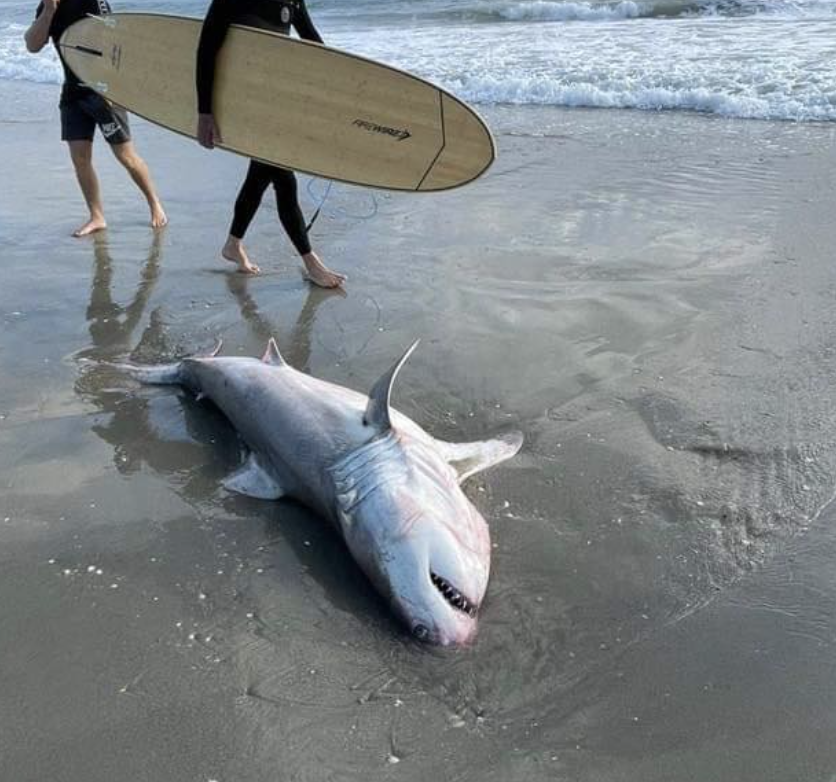
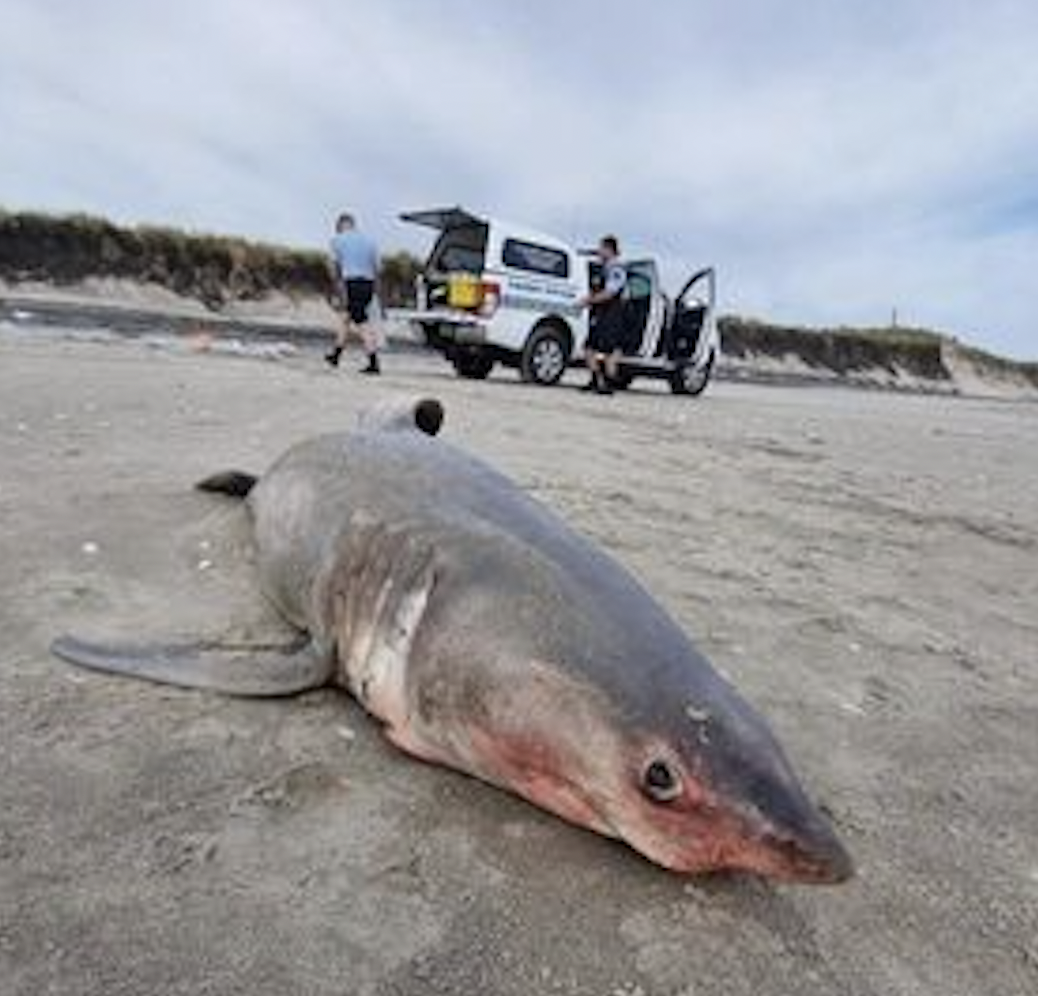
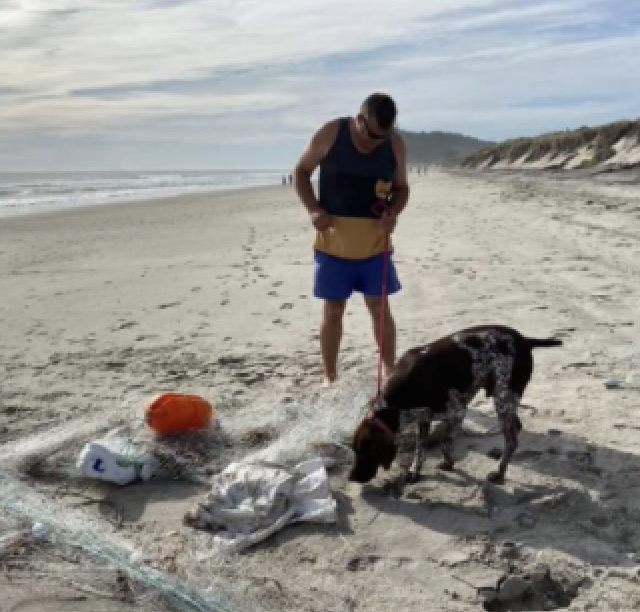
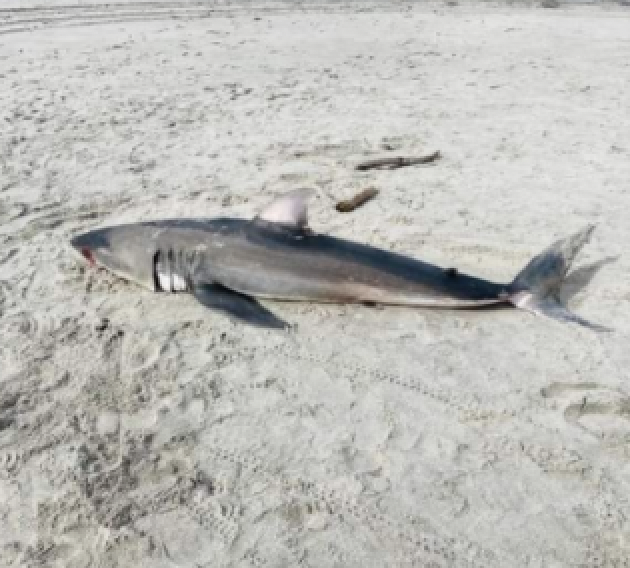
Great White encounters occurred frequently through the Summer of 2021/22, with Dr Elliott responding as best possible to local stakeholders, providing advice to lifeguards, surfing groups, and local water users, in order to reduce potential risks associated with recreating in the foraging ground of apex predators.
Juvenile Great Whites eat fish and small prey and thus we do not visibly represent their natural prey. However, conservation success has also increased seal populations, which are moving further north, and of which are present in the BOP region. Residence of sub-adult Great Whites were rumoured, these being sharks large than 2.5m and of which start to prey on seals.
The overlap of seals and this demographic of shark is potentially risky to water users and thus it is essential that the distribution of their habitat use and behaviour is defined and put in context with ours.
No further adverse interactions occurred between humans and sharks in the Summer of 21/22, however fishermen were still regularly witnessing sharks at their boats, surfers were still having the odd bump and unfortunately illegal behaviour was witnessed, for example a Great White towing around a BBQ LPG bottle by a hook and trace.
With a DOC permit having been issued in June 2022, Dr Elliott is now able to commence some much needed research on the Great Whites in this region in order to answers three key questions:
1) Where did these sharks come from?
2) Why are they here?
3) and how does their movement and behaviour overlap with ours?
These questions are to be answered by deploying satellite tags on the sharks, and by taking small DNA tissue samples while tagging. This research has been permitted by DOC and has been developed and justified through consultation with local Iwi.
In doing so, the habitat use and behaviour of these sharks can be better understood, to not only ensure we protect the Great White and the ecosystem they ensure the health of, but also so that we as people, playing in their ocean, can be best informed and make educated decisions about where we play.
The tagging aspect of this Great White Project is being supported by SOS, as a charitable avenue for the public to donate and sponsor a shark through.
New Zealand does not have a large pool of funding resources for marine mega-predators. Conventional marine research funding generally comes from the fishing industry, in order to better harvest and sustain fish resources. As sharks are not generally a targeted fishery, funding for research on them in notably absent. SOS and Dr Elliott experienced this in 2012 when attempting to satellite tag Blue sharks in an effort to ban shark finning in NZ. With a ‘sponsor a shark’ approach, the NZ public funded 15 satellite tags which were deployed. The findings from this study assisted in a shark fin ban, but also provided breakthrough scientific understanding of the Blue shark in this region; something which had never been done before.
Similarly with regard to this Great White study, a sponsor a shark approach, will enable ground breaking information that will not only benefit the sharks, and the ecosystem they maintain, but also ourselves.
The ultimate goal of this project is to tag Great Whites in this region, and have their tracks displayed on this website live, for free, for all the public to view, in order to enable best possible decision making as to where people decide to play in the ocean. This will be called the GREAT WHITE APP.
The scientific understanding obtained by this tagging will also enable ground breaking insight for the Great White shark and its habitation of a region which has been historically rare.

An example of a shark track generated through satellite tag data. Every-time the shark’s dorsal fin and thus the tag, breaks the water’s surface we get an instant location via satellite. Such information over the short term gives real time information of where sharks are hanging out, and long term we can determine trends in areas they reside in and what they are doing in those areas, for themselves, and relative to us. Overall information is empowering for the public to make their own decisions about where they go in the water
Satellite tags are not cheap ($4,300NZD each) including satellite time and thus if you want to sponsor a Great White Shark, and name it, please submit an email to SOS via CONTACT US link and a charitable donation can be made (which will be a taxable write off through our charitable status).
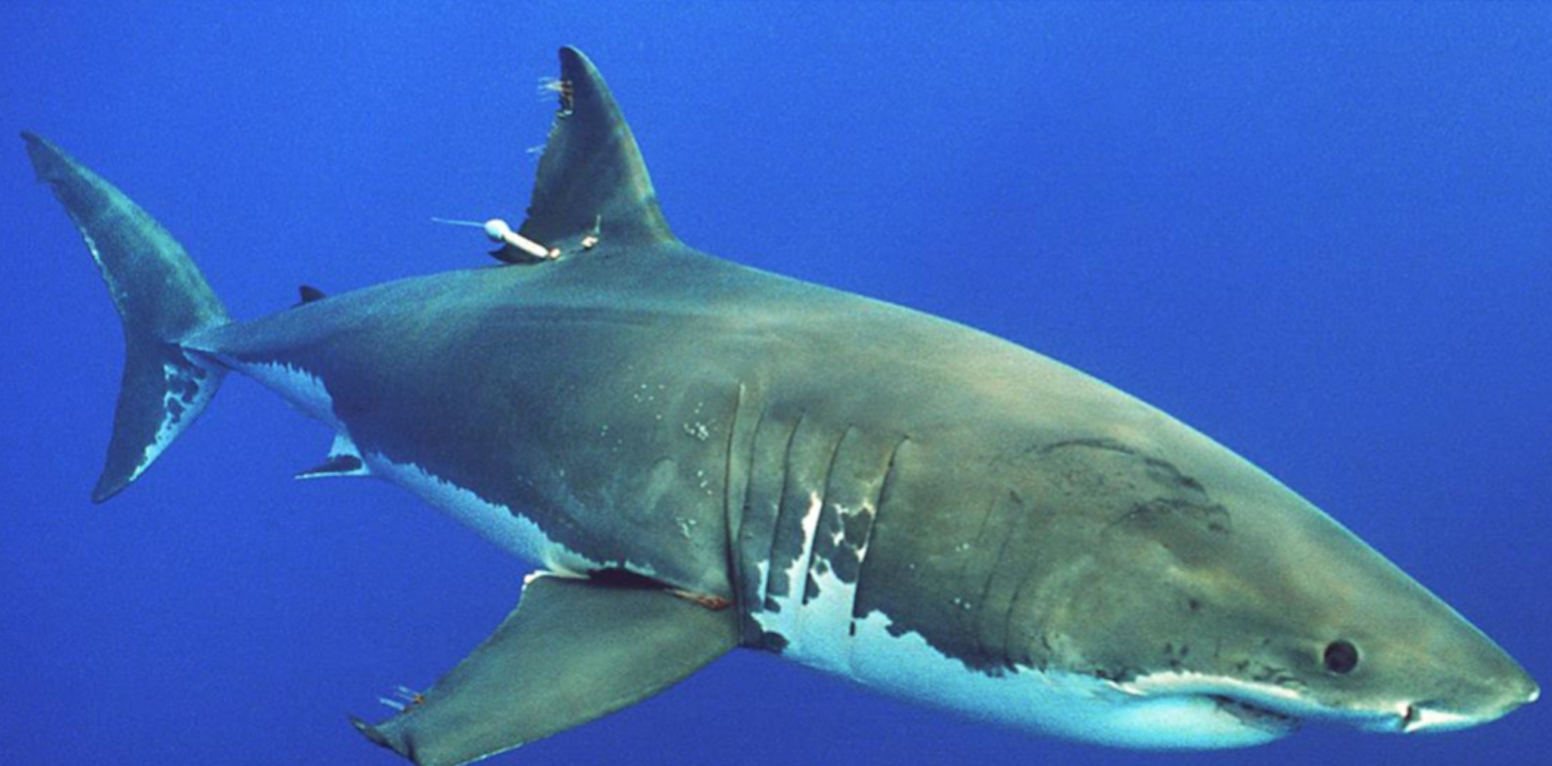
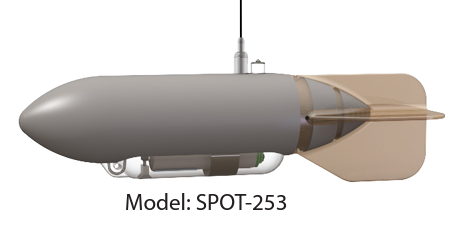
People or companies who sponsor a shark will be able to name their shark and will be provided with information and imagery about that individual, for their own interest and/or for marketing purposes. Dr Elliott will provide written blogs for each shark tracked on the website, explaining the movement and behaviour of each individual and how that is relevant to habitat and where we recreate. The Great White App will also have incredible interactive layers that users can play with to visually see how these sharks utilise their environment, where activity is more common, and therefore how that may educate our recreation.

Example data in the Great White App showing unnamed ‘tagged sharks’ in Tairua. With interactive 3D layers and navigation, sponsoring a shark will not only entertain and educate, but it will empower the scientific research required to ensure their conservation and continued provision of ecosystem services.

Example data in the Great White App showing how most recent location, shark tracks, and activity hotspots, can be selected by users, along with different satellite or map layer data. (note some locations show shark ‘on land’ as this is example data, where tags were driven by car and boat in testing, and there is also some location error in satellite data of around 250m which can make sharks appear near/on land if you zoom in very close).
Overall, the goal of this citizen empowered project is to co-exist with one of natures’ greatest apex predators. Sharks are essential to healthy oceans and as Kiwis, we are proud to have some of the best marine habitats on earth, but we also enjoy playing in them; so increasing our understanding of nature is essential in order for all of us to enjoy it.
This project commenced 1 Dec 2022. It expanded to tag Great Whites in Stewart Island in 2025, tagging 15 sharks which are presently being tracks. The success of this project has seen the DOC and Iwi permit extended to allow 30 more Great Whites to be tagged! We are presently open for sponsorships for these tags/sharks so please email us below if interested. sustainableoceansociety@gmail.com
Alternatively if this sponsored amount is too large for you but you would still like to contribute you can also sponsor an acoustic tag for $800NZD which we also attach to the sharks. These last for up to 10 years and are detected underwater by acoustic recevier stations. Several we have placed around Edwards/Stewart Island, and there are hundreds along the Australian coastline. Additionally, any financial support/donations are welcomed to help support the cost of running this project, please click this GET INVOLVED link to make a donation of your choosing.
Kind regards and thanks for the support.
The commercial research vessel, trailer and towing vehicle required for shark tagging and further research has been supported by brand alignments with these incredible New Zealand companies:

